
Ball Bounce
Gimica GmbHCasual
4.510.52K Reviews
- Version
- 1.13.0
- Installs
- 5.00M
- Age Rating
- Everyone
Screenshots
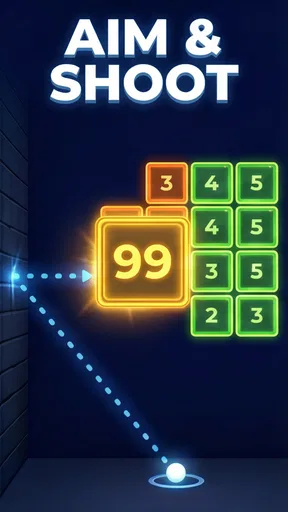
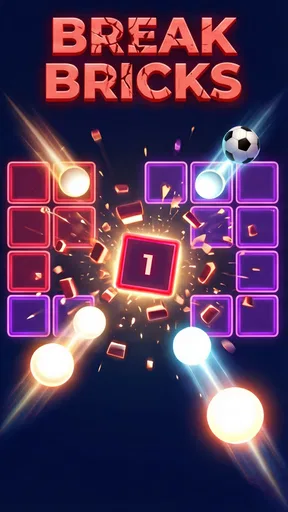
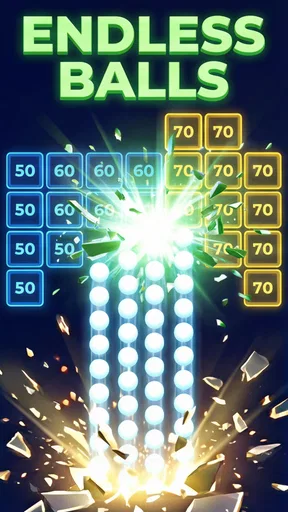

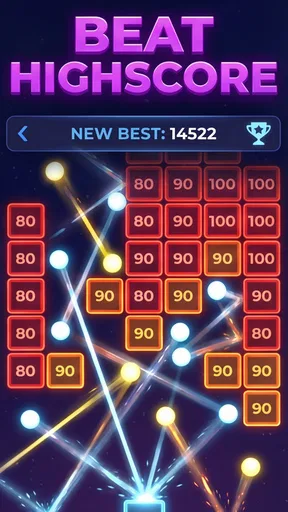
Our Review of Ball Bounce
 Analysis by Appyee
I spent time with Ball Bounce as the kind of casual game I can open for a few minutes without preparing for a long session. Its central idea is easy to understand: aim a shot, break bricks, collect or stack balls when possible, and try to turn one launch into a larger chain of bouncing action. That simplicity is the main attraction, but it also makes the game’s fit depend heavily on what you want from a mobile game.
Developed by Gimica GmbH, this is a free casual game for everyone, with a 4.5 average from around 138 thousand ratings and over 5 million installs. Those figures suggest that its quick, accessible style has found a broad audience. In my experience, it works best as a low-commitment distraction rather than as a deep arcade challenge. You can understand the basic play almost immediately, yet improving your decisions still gives each attempt a small sense of purpose.
How to decide whether Ball Bounce fits your play style
I’d judge Ball Bounce by whether its aim-and-rebound loop still feels satisfying after the novelty of watching a big chain wears off. In this section, I’d look at what makes a quick session worth returning to, and what might make the game feel like a temporary distraction instead. That distinction is useful before deciding how much space it deserves on your phone.
The first question is how much complexity you want
The most important decision is whether you want a game built around immediate interaction or one that asks you to learn several systems. Ball Bounce belongs firmly in the first group. The appeal comes from lining up a shot, watching the balls ricochet through the brick layout, and seeing how much damage a carefully chosen angle can create. I found that this makes it suitable for short breaks, waiting rooms, commutes, or those moments when I want something more active than scrolling but less demanding than a full game session.
The controls and objective are approachable enough for a wide age range, which matches its Everyone content rating. You do not need prior knowledge of brick-breaking games to understand what to do. The real decision is not whether you can play it, but whether repeated rounds of aiming and clearing will hold your attention. If you enjoy refining a shot and watching a plan unfold, the loop has staying power. If you need a story, character progression, or a large variety of activities, the straightforward format may feel narrow.
What I look for during a short session
When I use a game like this during a brief pause, I care about three things: how quickly I can start, whether a mistake feels understandable, and whether the next attempt gives me a reason to continue. Ball Bounce does well with the first point. Its concept is immediately readable, so I can begin without studying instructions or learning a complicated control scheme.
The second point depends on how carefully I aim. A shot that looks promising can still produce a disappointing result if the angle does not create enough useful rebounds. That is part of the game’s charm, but it also means I sometimes felt responsible for a poor outcome even when the board looked inviting. The third point comes from trying to improve the opening shot rather than simply firing as quickly as possible. I recommend treating the first launch as a planning exercise: inspect the brick arrangement, identify a likely rebound path, and only then commit.
The small strategic habit that makes a difference
My most useful adjustment was to stop focusing only on the nearest brick. The immediate target is often less important than the direction the balls will take afterward. A shot that removes one obvious obstacle but sends the rest of the action into an unhelpful area may be weaker than a less dramatic opening that creates several future contacts.
This is where the stacking idea becomes meaningful. When additional balls can be gathered, the value of a good angle increases because later launches can produce a denser pattern of impacts. I found it helpful to think in terms of future rebound space, not just the first collision. Leave yourself room for the next sequence whenever the layout allows it, and avoid making a choice simply because it produces an attractive first hit.
Why the game feels satisfying when the board opens up
The best moments come from a shot that keeps finding useful surfaces. A single launch can develop into a busy chain of rebounds, and the visual rhythm gives a simple action more weight than it initially seems to deserve. I enjoy that the result is easy to read: a strong decision produces more activity, while a weak angle ends quickly or clears less than hoped.
That clarity is valuable for casual play. I do not need to remember a complicated sequence of abilities or manage a large inventory between attempts. The board itself provides the immediate problem. For someone who likes light puzzle elements inside an arcade format, this is a pleasant balance. It is not a traditional puzzle game with elaborate logic, but it rewards spatial judgement and patience.
Where it wins against familiar casual alternatives
Compared with a basic endless runner, Ball Bounce gives me more time to think before acting. A runner usually tests reactions and rapid correction, while this game lets me study the arrangement and choose an angle. That makes it a better fit when I want a calmer form of concentration rather than constant swiping.
Compared with a match-style puzzle game, it has less emphasis on rearranging pieces or planning several turns ahead. Its satisfaction comes from physics-like movement and shot placement instead of building color combinations. I prefer Ball Bounce when I want a quick tactical decision with an immediate visual payoff. I would choose a match game instead when I want more board manipulation and a stronger sense of solving a structured puzzle.
It also differs from a classic brick-breaker that expects direct paddle control. Here, the important moment is the launch and the angle, not continuous movement at the bottom of the screen. That distinction matters. If you enjoy steering a paddle in real time, this may feel less hands-on. If you prefer setting up a shot and observing the chain, the reduced control is a strength rather than a weakness.
A realistic everyday use case
Imagine having seven minutes before an appointment. I would open Ball Bounce, play a few attempts, and stop without feeling that I had abandoned a complicated campaign. The format suits that situation because each launch gives me a clear point of focus. I can also play with the sound off if I am in a quiet place, although the experience becomes more visually driven when audio is not part of the moment.
Another useful situation is a short mental reset after work. I would not describe it as a relaxing game in the same way as a slow word puzzle, because a poor angle can still be irritating. However, it redirects attention toward a contained problem. For me, that makes it a better break than opening a social feed when I want to interrupt a repetitive routine.
Where the simplicity becomes a limitation
The same focused design that makes the game accessible can reduce its appeal over longer periods. Once I understood the basic rhythm, I wanted more variation in the kinds of decisions I was making. The core loop remains the main event, so players who need frequent new mechanics may eventually feel that they have seen the essential idea.
This is also not the right choice for someone looking for a narrative journey, competitive multiplayer, or a role-playing progression system. Nothing about its casual brick-breaking identity suggests that those experiences are the goal. I would skip it if my priority were a game with a strong cast of characters, a detailed world, or a long-term build to manage.
What to know about the free model
Ball Bounce is free to download and play, with optional in-app purchases ranging from $0.99 to $3.49 per item. That makes it easy to try before deciding whether it deserves a regular place on your phone. My advice is to treat the purchase options as optional conveniences rather than part of the reason to begin. The core question is whether the basic aiming-and-bouncing loop is enjoyable on its own.
This matters because casual games can encourage quick spending when a player is already invested in a run. I prefer to decide in advance whether I am willing to pay for extras, instead of making that choice during a frustrating moment. If you are comfortable keeping the experience entirely free, the game remains a straightforward option for short sessions. If you dislike any free-to-play pressure at all, a paid casual title with a single upfront cost may suit you better, even if it offers less immediate accessibility.
Device and version considerations
The current version is 1.8.0, and the game supports devices running Android 7.0 or later. That broad compatibility is useful if you are playing on an older Android phone rather than a recent flagship. I still recommend checking how comfortably the game runs on your particular device before committing to long sessions, especially if you are using an older handset with limited battery life or storage.
Because the game is built around short attempts, it does not need to become a major part of your daily routine to be worthwhile. I see that as an advantage for people who want something disposable and easy to revisit. At the same time, players seeking a title that grows dramatically through updates or expands into several genres should set their expectations lower. The appeal is concentrated in the act of choosing a shot and watching its consequences.
Three practical ways to get more from each attempt
First, take a moment before launching rather than treating every board as a reflex challenge. Look for surfaces that can redirect the balls through several useful areas. The best opening is not always the one aimed at the largest visible group of bricks.
Second, pay attention to where the action finishes, not just how much it clears. A spectacular chain can still leave the next position awkward. I found that preserving a workable future angle often mattered more than chasing the biggest immediate burst.
Third, use short sessions deliberately. Playing until frustration can make the simple loop feel repetitive, while stopping after a satisfying sequence keeps the game pleasant. This is a small but important trade-off: Ball Bounce is strongest as a repeatable break, not necessarily as a game to keep open for an entire evening.
Who should choose an alternative instead
I would point a competitive player toward a different category if they need rankings, direct opponents, or a clear skill ladder. I would also recommend a richer puzzle game to anyone who wants layered objectives and more control over the board. A classic arcade brick-breaker may be better for players who want constant movement and manual timing.
On the other hand, I would specifically suggest Ball Bounce to someone who says, “I want a game I can understand in seconds but still play with a little thought.” It occupies a useful middle ground between mindless tapping and demanding strategy. The game does not ask for a large time investment, and its basic interaction is friendly enough for casual players who normally avoid more complicated mobile titles.
My recommendation
I recommend Ball Bounce if you enjoy compact arcade sessions, angle-based decisions, and the satisfaction of seeing one well-planned launch create a longer chain of impacts. Gimica GmbH has kept the concept focused, and that focus is why it works so well as a quick break. The Everyone rating and broad Android support also make it an approachable choice for households with different kinds of players.
I would not recommend it as your only mobile game if you need deep progression, a story, multiplayer competition, or constant mechanical variety. Its free entry makes trying it low-risk, but the optional purchases mean you should decide how you want to play before spending. For me, the strongest use is simple: open it when I have a few spare minutes, study the board, aim with intention, and enjoy the rebound sequence when the plan works.
With over 5 million installs, around 10 thousand written reviews, and a 4.5 average rating, it has clearly connected with many casual players. Those figures do not change the central judgement, though: this is a focused brick-breaking game, not an all-purpose arcade package. If that focused loop sounds appealing, it is worth trying. If you are already looking for a more elaborate alternative, you will probably notice its limits quickly.
Privacy and Permissions
See what permissions an app requests and how it handles your data.
- Photos/Media/Files
- read the contents of your USB storage
- Storage
- read the contents of your USB storage
- Wi-Fi connection information
- view Wi-Fi connections
- Other
- view network connections, full network access, read terms you added to the dictionary, control vibration, prevent device from sleeping, Google Play license check
Verdict
Strengths of Ball Bounce
- Simple controls make it easy to start playing immediately.
- Short levels are convenient for quick gaming sessions.
- Physics-based challenges provide satisfying ball movement.
- Bright visuals make obstacles easy to recognize.
- Playable offline, making it useful without an internet connection.
Limitations of Ball Bounce
- Gameplay can become repetitive after extended play.
- Some levels may feel difficult without precise timing.
- Ads may interrupt the experience between attempts.
- Limited variety can reduce long-term replay value.
- Progress may feel slow for players seeking faster rewards.
Other Releases by Gimica GmbH
View All


Similar Picks in This Category
View All
My Talking Angela
Outfit7 Limited4.2

My Talking Tom
Outfit7 Limited4.3

Pou
Zakeh4.2

My Talking Tom 2: Pet Game
Outfit7 Limited4.3

Candy Crush Saga
King4.6

Bridge Race
Supersonic Studios LTD4.1
Frequently Asked Questions
What is Ball Bounce, and how do you play it?
Ball Bounce is a casual arcade game focused on controlling a bouncing ball through platforms, obstacles, and changing level layouts. The main objective is usually to keep the ball moving safely, collect available items, and reach the end of each stage without falling or hitting dangerous objects. Its simple controls make it easy to start, although later levels can require careful timing and quick reactions.
Is Ball Bounce free to download and play?
Ball Bounce can generally be downloaded for free on supported mobile devices, allowing players to try the core gameplay without an initial purchase. However, availability of advertisements, optional in-app purchases, extra lives, cosmetic items, or other premium features may depend on the specific version published for Android or iOS. It is worth checking the store listing before downloading if you want to avoid unexpected costs.
Does Ball Bounce work offline?
Ball Bounce may be playable without a continuous internet connection, which is convenient for short sessions while traveling or when mobile data is unavailable. Basic levels and offline progress can often be accessed locally, but advertisements, cloud synchronization, leaderboards, updates, or certain online rewards may require internet access. Because offline functionality can vary between versions, confirm the current store description and test the game after installation.
Is Ball Bounce suitable for children and beginners?
Ball Bounce is generally approachable for beginners because its gameplay is based on straightforward movement and timing rather than complicated controls or extensive tutorials. Children may also find the colorful arcade style appealing, but parents should review the app’s age rating, advertising, and possible in-app purchases before allowing unsupervised play. Difficulty can increase quickly, so younger players may need patience during more demanding stages.
Does Ball Bounce contain ads or in-app purchases?
The free version of Ball Bounce may include advertising, particularly between levels or after a failed attempt, while optional purchases may be offered for removing ads, unlocking content, or obtaining helpful bonuses. The exact monetization system can change with updates and may differ between Android and iOS. Before playing extensively, review the purchase settings and consider enabling parental controls if the game will be used by children.
Play our best games!


